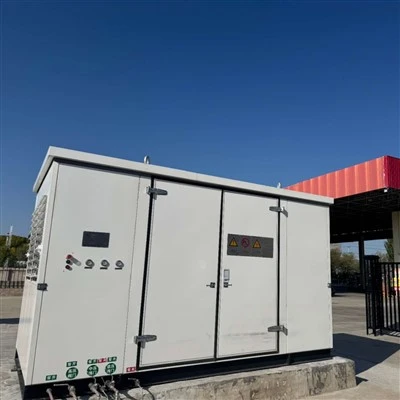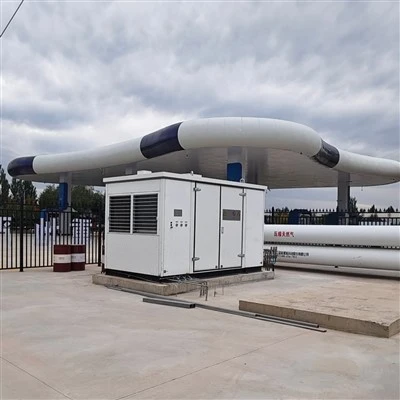

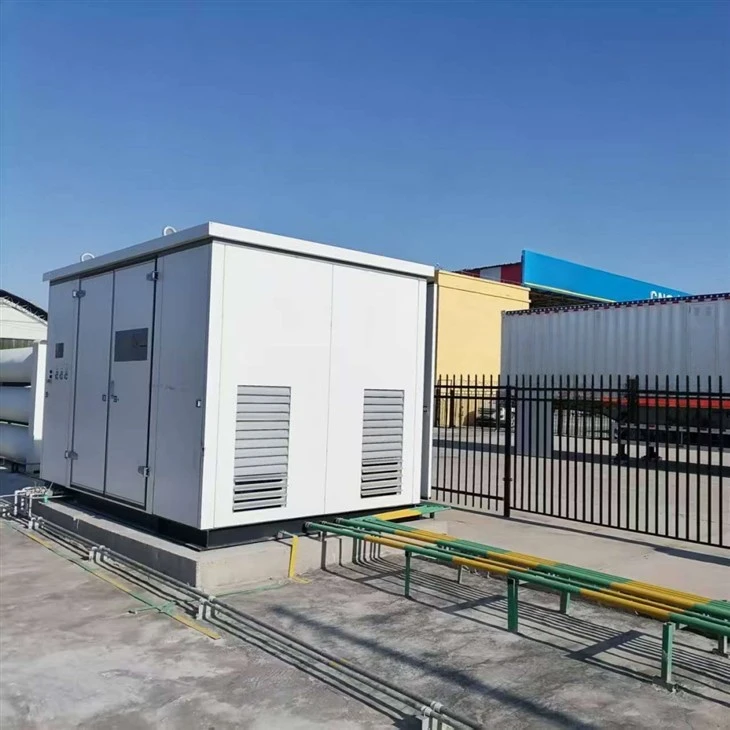
Qingdao Lenado Intelligent Equipment Co., Ltd. is one of the most reliable manufacturers and suppliers of cng natural gas station in China. With a professional production team, we are able to meet the needs of the majority of our customers. Welcome to wholesale bulk customized cng natural gas station from our factory.
Technical Specifications
CNG Natural Gas Station | High-Availability Dual-System Compressor Skid
Core Value Proposition
✅ Dual-System Independent Redundancy | ✅ 24/7 Unattended PLC Operation | ✅ Low Shaft Power & High Efficiency | ✅ 100M-Cycle Fault Logging | ✅ Remote DRNET Monitoring & Diagnostics
Product Overview
Our CNG natural gas station solutions are engineered for high-availability, continuous-operation fleet fueling where downtime is not an option. Built around a dual-system hydraulic reciprocating compressor architecture, each skid integrates two completely independent compression trains that can operate simultaneously for peak demand or run in hot-standby mode for uninterrupted service.
Designed for inlet pressures of 3–20 MPa and delivering vehicle-grade CNG at ≤25 MPa, these skids achieve average flow rates from 1,200 to 4,500 Nm³/h with a total installed power of only 2×45 kW (≤98 kW). Actual shaft power during normal operation averages ~75% of rated capacity, significantly reducing electricity costs.
Integrated Siemens PLC automation manages pressure sequencing, cascade storage switching, and fault diagnostics without manual intervention. Combined with TCP/IP remote monitoring, soft-start motor protection, and oil-free compression technology, our CNG natural gas stations deliver the lowest total cost of ownership (TCO) for commercial bus depots, highway corridors, and industrial gas hubs.
Key Advantages
1. Dual-System Architecture for Uninterrupted Fueling
Each compressor skid comprises two independent hydraulic compression systems. A single system can operate at 50% of total capacity while the other undergoes maintenance, or both can run in parallel during peak fueling hours. This redundancy eliminates single-point failures and ensures 24/7 operational continuity for mission-critical fleet depots.
2. Fully Automated 24/7 Unattended Operation
Siemens S7-200Smart PLC with Smart700 HMI touchscreen manages auto-start, pressure curve optimization, and cascade switching logic. The system automatically sequences low→medium→high pressure storage, triggers maintenance alerts, and logs operational data. No manual valve switching or constant operator supervision is required.
3. Instant Start Without Depressurization
Traditional mechanical compressors must vent cylinder pressure before startup to reduce motor torque, wasting compressed gas. Our hydraulic drive isolates motor operation from compression cylinders, allowing instant start at full system pressure. This eliminates gas waste, reduces compressor cycling by up to 20%, and extends equipment lifespan.
4. Low Actual Power Consumption & High Efficiency
With an installed power of 2×45 kW for ~2,500 Nm³/h capacity, actual operating power averages only ~75% of rated load due to optimized hydraulic efficiency and soft-start motor control. The dual-system layout allows operators to run only one system during low-demand periods, cutting electricity consumption by up to 40% compared to single-train compressors.
5. Predictive Maintenance & Lifetime Software Support
The PLC control cabinet logs up to 100 million cylinder reciprocation cycles, tracking pressure curves, oil temperature, and fault history. Integrated DRNET remote monitoring platform enables real-time diagnostics, predictive maintenance alerts, and free lifetime software upgrades via internet connectivity, reducing unplanned downtime and service costs.
Technical Specifications
|
Parameter |
Standard Specification |
|
Model Series |
TYCZ-S Series (Configurable: 1200 / 1600 / 2400 / 2500 / 4000 / 4500 Nm³/h) |
|
Compressed Medium |
Natural Gas (GB18047-2000 Compliant) |
|
Average Flow Rate |
1,200 – 4,500 Nm³/h (Per dual-system configuration) |
|
Inlet Pressure Range |
3 – 20 MPa (Adaptive, no external regulator required) |
|
Max Outlet Pressure |
≤25 MPa (250 bar) |
|
Compression Stages |
Two-Stage Hydraulic Reciprocating |
|
Layout Structure |
Double-Row Vertical, Dual-System Independent |
|
Driving Method |
Motor-Driven Hydraulic Pump |
|
Lubrication Mode |
Oil-Free (Gas Chamber) |
|
Oil Content in Gas |
<0.1 ppm (Post-Compression) |
|
Main Motor Power |
2×30 kW to 2×110 kW (Per capacity model) |
|
Total Power Consumption |
≤98 kW (for 2,400–2,500 Nm³/h baseline) |
|
Motor Speed |
1,480 r/min |
|
Cooling Method |
Water-Circulating Air Cooling |
|
Cooling Medium |
Ethylene Glycol Antifreeze (Closed Loop) |
|
Control System |
Siemens S7-200Smart PLC + Smart700 HMI + Soft Starter |
|
Explosion-Proof Grade |
ExdIIBT4 / ATEX Certified |
|
Rated Voltage |
AC 380V–400V / 50Hz (60Hz Optional) |
|
Noise Level |
≤75 dB(A) @ 1 meter |
|
Overall Dimensions |
4.35 × 2.3 × 2.65 m (Skid-Mounted Enclosure) |
|
Equipment Weight |
~6.5 Tons |
|
Operating Temperature |
-40°C to +55°C |
|
Automation Level |
Fully Unattended / Remote TCP/IP Monitoring |
Configuration Highlights
Core Compression & Hydraulic System
Compression Cylinders: Hydraulic Reciprocating Double-Force Design (Genketech Gas)
Hydraulic Pumps: Hengyuan Hydraulics 32 MPa / 1,480 r/min
Ex-Proof Motors: Shandong Zotye 30–110 kW (dIIBT4 / ATEX Certified)
Soft Starters: RF Series for smooth, grid-friendly motor startup without voltage dip
Control & Automation
PLC Controller: Siemens S7-200Smart / CP1H-XA40D Series
HMI Touchscreen: Siemens Smart700 7" True-Color LCD
Communication: MODBUS RTU (RS485), TCP/IP, DRNET Remote Service Platform
Software: Lifetime free upgrades, fault logging up to 100 million reciprocation cycles
Safety & Monitoring
Gas Detectors: ESD100 Combustible Gas Probes (15% LEL fan start / 25% LEL auto shutdown)
Pressure/Temperature Sensors: 0–40 MPa transmitters, oil level/temp monitoring
ESD Interface: External emergency stop compatible with station-wide control systems
Safety Valves: High-pressure relief with manual bypass for maintenance
Sealing & Filtration (Premium Brands)
O-Rings: Parker Fluorine Rubber (USA)
Piston & Rod Seals: SKF DR1000-QH/QG (Austria) / Parker DR1000-YG (USA)
Oil Seals: Simrit DR1000-YH (Germany)
Inlet Gas Filter: 50 μm precision particulate & moisture removal
Return Oil Filter: 10 μm magnetic filter for metal particle capture
Electrical & Explosion Protection
Motor Cabling: Galvanized steel pipes for main motor to explosion-proof box
Auxiliary Cabling: Plastic-clad metal hoses for vibration/corrosion resistance
Anti-Surge Protector: Installed at power distribution cabinet input
Explosion-Proof Lighting: Integrated for safe maintenance access
Safety & Compliance
Explosion Protection & Certification
Electrical Enclosures: ExdIIBT4 per ATEX Directive 2014/34/EU; CE Marking compliant
Pressure Vessels: GB 150.2-2011 / ISO 9809 / ASME Section VIII Div.1 certified
High-Pressure Piping: 06Cr19Ni10 Stainless Steel per GB/T14976-94 / ASME B31.3
Dispensing Integration: Compatible with Exibdme II AT4 / CE / ATEX certified dispensers
Multi-Layer Safety Logic
Gas Detection & Ventilation: Automatic exhaust fan activation at 15% LEL; complete system shutdown at 25% LEL
Pressure & Temperature Interlocks: Auto-stop on abnormal inlet/outlet pressure, oil temperature, or cooling failure
ESD Integration: External emergency stop interface accepts station-wide ESD signals for coordinated power & pipeline isolation
Hydraulic Over-Pressure Protection: Relief valves prevent system pressure exceeding 315 bar
Anti-Static & Grounding: All metallic components bonded and grounded per NFPA 52
Zero Emission Cooling: Closed-loop ethylene glycol system with no wastewater discharge
Unattended Operation Safeguards
Power-On Self-Inspection: PLC automatically checks valve status, cooling cycle, oil level, and pressure ranges before startup
Automatic Pressure Sequencing: Programmable logic switches gas supply from low→medium→high pressure storage to maximize dispenser efficiency
Fault Alarm & Protective Shutdown: Real-time display of abnormal parameters with audible/visual alarms and automatic system isolation
Remote Diagnostics: DRNET platform enables off-site engineers to review pressure curves, oil temperature trends, and historical fault logs
Typical Applications
Commercial Fleet Depots
Ideal for municipal transit, logistics trucks, and waste collection fleets requiring high-throughput, 24/7 fueling. Dual-system redundancy ensures continuous operation during peak refueling windows, while unattended PLC control reduces staffing costs.
Highway Service & Transport Corridors
Modular skid design enables rapid deployment along freight routes. Three-line cascade refueling maximizes trailer gas utilization, reducing compressor runtime by 40%. Remote monitoring allows centralized management of distributed CNG natural gas stations.
Industrial Park & Utility Gas Supply
Adapts to fluctuating pipeline pressures (3–20 MPa) without external regulators. High-availability layout ensures continuous gas delivery for manufacturing, boiler systems, and on-site vehicle fleets with zero manual intervention.
Sub-Station Expansion & Satellite Hubs
Integrates with existing storage cascades and dispensers. Compact footprint (4.35m skid) fits constrained urban sites while maintaining 2,500+ Nm³/h throughput. Dual-system design allows phased capacity upgrades without full station shutdown.
Continuous Operation & Critical Infrastructure
Mining support facilities, emergency response bases, and port logistics hubs where compressor downtime impacts revenue or safety. Hot-standby dual-system architecture guarantees fuel availability during maintenance cycles or grid fluctuations.
After-Sales & Support
Warranty Coverage
Standard Warranty: 12 months from commissioning or 2 months from delivery (whichever occurs first). Extended 24-month warranty available for containerized or dual-system configurations.
Coverage: Manufacturing defects in compressors, PLC systems, hydraulic components, enclosure structure, and safety interlocks.
Exclusions: Normal wear items (seals, filters), improper operation, force majeure events.
Included Spare Parts Package
Each unit ships with essential maintenance spares:
Medium pressure solenoid valve × 1 set
Pressure transmitter (0–40 MPa) × 1 set
Circuit breakers (20A/10A/6A/3A) × 6 units
Contactors (GMC-9, GMD-25) × 2 units
Relays × 2 units
O-rings (rubber) × 30 pieces
Check valves × 4 units
Analog I/O panels × 2 sets
Operating handles × 1 set
Commissioning & Training
On-Site Setup: Certified engineers supervise installation, pressure testing, and PLC parameter tuning for dual-system synchronization
Operator Training: 3-day program covering HMI navigation, safety protocols, dual-system switching, routine maintenance, and remote monitoring setup
Documentation: Complete P&ID diagrams, electrical schematics, PLC logic flowcharts, and maintenance manuals in English
Preventive Maintenance Schedule
|
Component |
3 Months |
6 Months |
1 Year |
2 Years |
3 Years |
|
Oil Return Filter |
Inspect |
Replace |
Replace |
Replace |
Replace |
|
Gas Inlet Filter |
Inspect |
Inspect |
Replace |
Replace |
Replace |
|
Antifreeze Fluid |
Check Level |
Test Concentration |
Replace |
Replace |
Replace |
|
Hydraulic Oil |
Check Level |
Inspect Quality |
Replace |
Replace |
Replace |
|
Air Cooler Fins |
Clean |
Clean |
Inspect |
Inspect |
Inspect |
|
Hydraulic Hoses |
Visual Check |
Visual Check |
Visual Check |
Replace |
Replace |
|
Enclosure Seals |
Inspect |
Inspect |
Inspect |
Replace |
Replace |
Remote Support & Software
24/7 Diagnostics: DRNET software tracks pressure curves, oil temperature, and fault logs via TCP/IP or 4G/5G
Lifetime Upgrades: PLC logic, HMI interface, and communication protocols updated at no charge
Technical Hotline: 1-hour response time for critical issues, 48-hour on-site dispatch for major failures
Predictive Alerts: Software analyzes reciprocation cycle data to recommend seal replacement before failure
Customization Services
Capacity Scaling: Configure single/dual systems from 1,200 to 4,500 Nm³/h based on fleet size and refueling schedule
Voltage Adaptation: Customize for 220V/60Hz, 480V/60Hz, or regional grid standards
Dispenser Integration: IC card payment, receipt printers, NGV1/NGV2 nozzles, or probe-type connectors
Climate Packages: Arctic (-40°C) or tropical (+55°C) cooling and antifreeze configurations
SCADA Integration: MODBUS/OPC-UA compatibility for centralized station management systems
FAQ Section
Q1: How does the dual-system design improve station uptime?
A: Each compressor skid contains two independent compression trains. If one system requires maintenance or experiences a fault, the other continues operating at 50% capacity, ensuring uninterrupted fueling for fleet vehicles. Both systems can also run in parallel during peak demand hours.
Q2: Is the station truly unattended, or does it require constant supervision?
A: Yes, it is designed for fully unattended 24/7 operation. The Siemens PLC automatically manages startup, pressure sequencing, cooling cycles, and fault diagnostics. Operators only need to perform scheduled maintenance and review remote alerts via the DRNET platform.
Q3: How does the power consumption compare to traditional mechanical compressors?
A: Actual shaft power averages ~75% of installed capacity due to optimized hydraulic efficiency and soft-start motor control. For a 2,500 Nm³/h model (2×45 kW), daily electricity costs are typically 30–40% lower than equivalent mechanical compressors, plus savings from eliminated oil-gas separation systems.
Q4: What maintenance is required for the dual-system compressor?
A: Routine tasks include quarterly filter inspections, annual hydraulic oil/antifreeze replacement, and seal inspections every 2–3 years. The PLC logs 100 million reciprocation cycles to predict wear before failure. Remote monitoring alerts maintenance teams automatically.
Q5: Can this station integrate with existing dispensers and storage cascades?
A: Absolutely. The skid is designed as a compressor core that integrates with standard CNG dispensers (JQD-B30B series compatible), storage cascades, and unloading posts. PLC logic can be configured to match existing station valve sequences and pressure setpoints.
Hot Tags: CNG natural gas station, China CNG natural gas station manufacturers, factory