
Lenado
Intelligent
Equipment
- Welcome to the website of OUR Company
- Email: genkegasstation@163.com
- Global Service Hotline: +86 18661639777
Industrial CNG Mother Station: High-Capacity Pipeline Gas Compression & Skid-Mounted Filling Systems
An industrial CNG Mother Station functions as the primary high-pressure distribution hub in compressed natural gas supply chains. Sourced directly from high-pressure pipeline networks (typically 1.6 MPa to 4.0 MPa) or gas gathering stations, the system processes, dehydrates, and compresses raw natural gas up to 25.0 MPa to fill high-capacity CNG tube trailer skids. Engineered for continuous 24/7 baseload operation, the complete system integrates gas filtration, custody transfer metering, automated molecular sieve dehydration, heavy-duty reciprocating compression, electronic priority sequencing, and high-flow dual-bay trailer filling columns onto heavy structural steel skids.
-
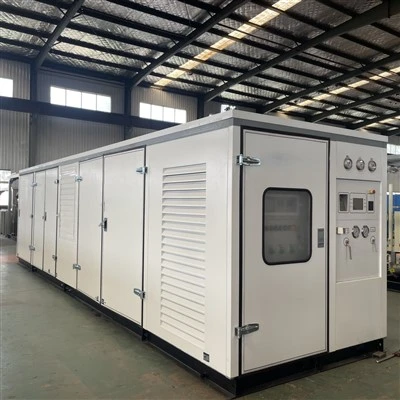
![CNG Natural Gas Refueling Mother Station]() CNG Natural Gas Refueling Mother StationCNG mother station engineering solutions. High-efficiency 25MPa compression, advanced dehydration, and automated safety systems. Custom designs for 50k-300k Nm³/d capacity.view more
CNG Natural Gas Refueling Mother StationCNG mother station engineering solutions. High-efficiency 25MPa compression, advanced dehydration, and automated safety systems. Custom designs for 50k-300k Nm³/d capacity.view more -
![CNG Mother Station System]() CNG Mother Station SystemProducts Description The CNG Mother Station System is a comprehensive process system that integrates natural gas filtration, metering, compression, dehydration, storage, and dispensing facilities.view more
CNG Mother Station SystemProducts Description The CNG Mother Station System is a comprehensive process system that integrates natural gas filtration, metering, compression, dehydration, storage, and dispensing facilities.view more -
![Gas Mother Station Compressor]() Gas Mother Station CompressorProducts Description Natural Gas Mother Station Compressors - High-Efficiency Solutions Designed for Complex Gas Conditions In the modern field of natural gas extraction and utilization, gas source conditions are becoming increasinglyview more
Gas Mother Station CompressorProducts Description Natural Gas Mother Station Compressors - High-Efficiency Solutions Designed for Complex Gas Conditions In the modern field of natural gas extraction and utilization, gas source conditions are becoming increasinglyview more -
![CNG Mother Station Compressor]() CNG Mother Station CompressorProduct Introduction In CNG (Compressed Natural Gas) mother station systems, the compressor serves not merely as a core component, but as the very "heart" that determines the entire station's production capacity andview more
CNG Mother Station CompressorProduct Introduction In CNG (Compressed Natural Gas) mother station systems, the compressor serves not merely as a core component, but as the very "heart" that determines the entire station's production capacity andview more


System Configurations & Architectural Layout
Inlet Filtration & Regulation Unit
Removes liquid hydrocarbons, entrained water, and particulate matter down to 1 micron via coalescing filters; regulates incoming pipeline fluctuations upstream of compression.
Dehydration Unit (TSA System)
Dual-tower activated alumina and molecular sieve regenerative desiccant system lowers water dew point below -40°C at operating pressure and hydrocarbon dew point to prevent hydrate formation in downstream high-pressure storage and transport cylinders.
Multi-Stage Compression Unit
Heavy-duty vertical or balanced-opposed reciprocating compressor skids driven by explosion-proof electric motors or gas engines, utilizing non-lubricated (or minimal-lube) cylinder designs to eliminate oil carryover into the gas stream.
Priority Control & Dispensing Unit
Pneumatic/electric actuated priority sequencing panel directs gas flow automatically through high, medium, and low-pressure storage cascades to maximize trailer fill ratios and fill times.
Key Technical Parameters
|
Technical Parameter |
Specification |
|
Inlet Pressure (Pin) |
1.0–4.0 MPa; customizable up to 6.3 MPa |
|
Rated Discharge Pressure (Pout) |
25.0 MPa; adjustable up to 27.5 MPa |
|
Processing Capacity (Q) |
50,000–150,000 Nm³/d; customizable up to 300,000 Nm³/d |
|
Compression Stages |
3-stage or 4-stage reciprocating compression; configured according to compression ratio, CR ≤ 3.5 per stage |
|
Outlet Gas Moisture Content |
≤ 5 mg/Nm³; process-specific configurations down to 1 mg/Nm³ |
|
Outlet Gas Hydrocarbon Dew Point |
Below −10°C at 25 MPa; customizable according to local pipeline tariff requirements |
|
Drive System |
Heavy-duty explosion-proof electric motor or Cummins/Caterpillar natural gas engine drive |
|
Cooling System |
Closed-loop air-cooled heat exchangers or integrated water-glycol plate-fin coolers with VFD fans |
|
Electrical Classification |
Class I, Division 1 / Zone 1; Ex d IIB T4; ATEX, IECEx and NEC-compliant enclosures |
Application Scenarios
City Gate & Pipeline Offtake Hubs
Installed directly adjacent to high-pressure transmission pipelines to bottle natural gas for off-grid industrial manufacturing plants, commercial complexes, and municipal heating networks.
Gas Field Gathering Stations
Compresses raw associated petroleum gas or wellhead gas directly into transport trailers where pipeline infrastructure is economically unviable.
Virtual Pipeline Logistics Terminals
Serves as the high-throughput filling terminus for fleets of 20-foot and 40-foot ISO CNG tube trailers operating at 25 MPa working pressure.

Engineering Selection & Sizing Criteria
Specifying a mother station requires matching compressor volumetric displacement and rod load limits against local gas feed conditions:
Suction Pressure Stability
Evaluate historical pipeline pressure drops. Minimum suction pressure dictates the compression ratio of the 1st stage cylinder, limiting maximum volumetric output.
Gas Composition & Specific Gravity (SG)
Heavy hydrocarbon fractions or high CO2/H2S concentrations require specialized metallurgy (e.g., 316L stainless steel valve assemblies and piston rods with tungsten carbide coating).
Ambient Temperature Profile
Ambient extremes from -40°C to +55°C dictate sizing parameters for interstage air coolers, lube oil heaters, and thermal insulation packages.
Trailer Turnaround Time
Calculate required mass flow rate based on target trailer water capacity (e.g., 4,000 Nm3 to 9,000 Nm3 per tube skid) and required fill window (typically 2 to 4 hours per batch).
Manufacturing, Materials & Quality Control
Structural integrity and pressure boundary safety dictate component selection and fabrication standards:
Pressure Vessels & Scrubber Shells: Fabricated from SA-516 Gr. 70 or SA-372 carbon steel plates, fully radiographed (RT) and ultrasonically tested (UT) in accordance with ASME Section VIII Division 1.
Compressor Crankcase & Cylinders: Crankcases manufactured from high-grade ductile cast iron (QT400-15 / EN-GJS-400-15) utilizing finite element analysis (FEA) to withstand alternating dynamic inertia loads; cylinders cast from alloy steel with replaceable heat-treated nitrided liners.
Valves & Piston Rings: Ring-type plate valves utilizing heat-treated stainless steel strips; piston rings manufactured from filled PTFE compounds selected for low friction and extended maintenance intervals (exceeding 8,000 operational hours before overhaul).
Non-Destructive Testing (NDT): 100% magnetic particle testing (MT) or dye penetrant testing (PT) on all high-pressure piping weld seams; hydrostatic pressure testing performed at 1.5 times maximum allowable working pressure (MAWP).

Customization & Engineering Integration Support
Skid Modularization
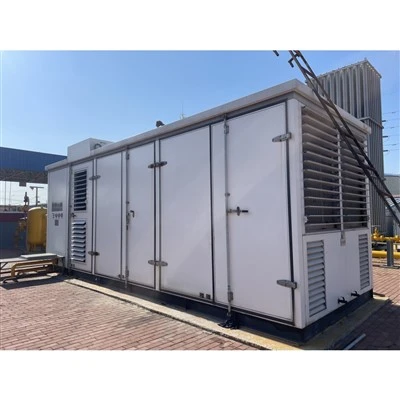
Custom layout configuration designed around restricted plot footprints, containerized enclosures, or modular drop-in skids.
Control System Integration
Siemens S7-1500 or Allen-Bradley GuardLogix PLC safety-instrumented systems (SIS) communicating via Modbus TCP, Profinet, or DNP3 to central SCADA networks.
Acoustic Attenuation
Optional sound-attenuating enclosures limiting external noise emissions to <= 75 dB(A) at 1 meter distance.
Engineering Deliverables
Complete submittal packages including P&ID schematics, HAZOP study documentation, electrical loop diagrams, and ASME Manufacturer's Data Reports (Form U-1).
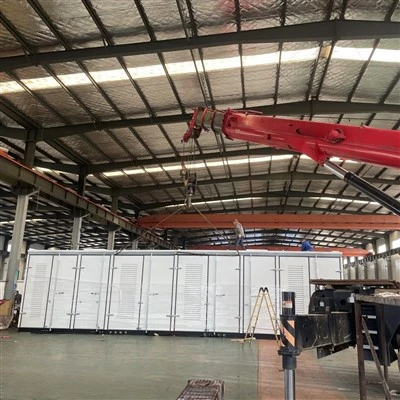
Factory Workshop


FAQ
Qingdao Lenado Intelligent Equipment Co., Ltd. is one of the most experienced CNG mother station manufacturers and suppliers in China. We have world-leading production equipment and strong manufacturing capabilities. Please rest assured to wholesale bulk customized CNG mother station from our factory.
cng mother station, CNG Mother Station Compressor, CNG Mother Station System