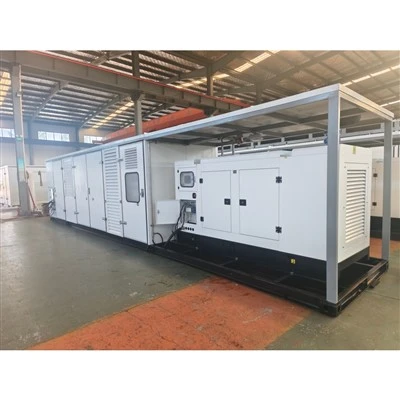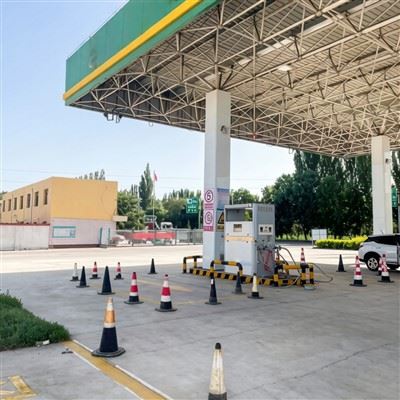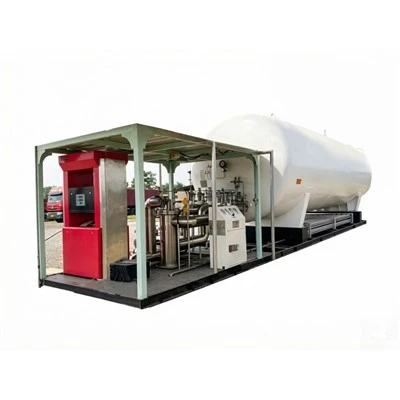


Qingdao Lenado Intelligent Equipment Co., Ltd. is one of the most reliable manufacturers and suppliers of lng peak-shaving station in China. With a professional production team, we are able to meet the needs of the majority of our customers. Welcome to wholesale bulk customized lng peak-shaving station from our factory.
Products Description
The LNG industry has a history of more than 60 years worldwide and its technology is now fully mature, having developed a complete process chain spanning liquefaction, storage, transportation, regasification and end-use applications. LNG facilities are categorized by type and application into three main categories: peak-shaving, base-load (baseload), and terminal.
1. LNG Peak-Shaving Stations
LNG peak-shaving stations store natural gas in liquefied form to meet peak demand. They are generally located far from natural gas production sources and are widely used in the gas transmission pipeline networks of developed countries to balance fluctuations in urban gas consumption. Like electricity supply, a city's gas demand varies considerably over time. Within a single year, for instance, winter consumption far exceeds that of summer due to heating demand-in Beijing, the peak-to-valley ratio of gas consumption between winter and summer reaches 4 to 10. Consequently, once a city's gas consumption reaches a certain scale, some form of peak-shaving is required: surplus gas during low-demand periods is stored and then fed back into the urban pipeline network during peak periods.
Two approaches are commonly used for urban gas peak-shaving: high-pressure gaseous storage in pressure vessels, and low-temperature atmospheric-pressure storage in liquefied form. Because LNG is stored at low pressure and holds far more gas per unit volume than other methods, LNG storage for peak shaving is safer, requires less investment per unit of capacity, and represents an advanced and effective peak-shaving solution.
LNG peak-shaving plants typically have limited liquefaction capacity but large storage and regasification capacity, and generally operate 150 to 200 days per year.
2. Base-Load Plants
Base-load plants, also referred to as baseload liquefaction plants, are mainly used for the large-scale production of LNG for export or trade. Such plants are mostly sited in coastal locations so that the LNG can be loaded onto carriers for shipment to importing countries or regions. They have very large processing capacity, which must be matched to the gas supply and to the shipping capacity of the LNG carrier fleet. Base-load plants have substantial liquefaction capacity and no regasification facilities.
Small base-load plants also exist overseas, producing fuel for vehicles or for satellite towns. The use of LNG as a transportation fuel is a relatively new application with very promising prospects. A fuel-production liquefaction plant is essentially the same as a peak-shaving plant, except that its LNG storage tanks are smaller and the product leaves the plant in liquid rather than vaporized form.
Process Description
1. Feed Gas Pretreatment
The feed gas generally comes from oil and gas fields or long-distance transmission pipelines. Upon entering the plant, entrained liquids and solid impurities are first removed. Prior to liquefaction, the gas undergoes further purification to remove acid gases, water, heavy hydrocarbons and mercury. This is necessary because CO₂, water and heavy hydrocarbons would freeze at cryogenic temperatures and block downstream piping and equipment, while sulfur and mercury would cause corrosion.
CO₂, SO₂ and other acid gases are removed by physical or chemical absorption, depending on their concentration. Physical absorption uses molecular sieves, while chemical absorption employs solutions such as alkanolamines (e.g., MEA/DEA) and sulfolane-amine solvents. Water is most commonly removed with molecular sieves, and mercury is typically removed using sulfur-impregnated activated carbon or molecular sieves.
2. Liquefaction
Liquefaction is the core of LNG production. The liquefaction process and the associated equipment configuration have a decisive impact on both plant efficiency and capital investment. Since the inception of LNG technology, a number of refrigeration schemes have been developed in succession: Joule-Thomson throttling, expander refrigeration, cascade refrigeration, mixed-refrigerant (MR) cycles, precooled mixed-refrigerant cycles, dual mixed-refrigerant (DMR) cycles, and single mixed-refrigerant (SMR) cycles. The most widely applied include the following:
A. Cascade Cycle
A typical cascade refrigeration cycle consists of three independent refrigeration circuits, usually operating at three different temperature levels and using propane, ethylene and methane as refrigerants, connected in series. Each circuit has its own compressor train to provide refrigerant at the required temperature level.
Cascade refrigeration is a mature technology; besides natural gas liquefaction, it is also applied in cryogenic ethylene separation. However, its drawbacks are evident: a large number of compressor trains, a complex process flow, and numerous control, operating and maintenance tasks, all of which result in relatively low reliability.
Hot Tags: lng peak-shaving station, China lng peak-shaving station manufacturers, factory, lng dispenser station, lng filling station package, lng station, lng station vaporizer system, lng tank filling station, lng vehicle fuelling station