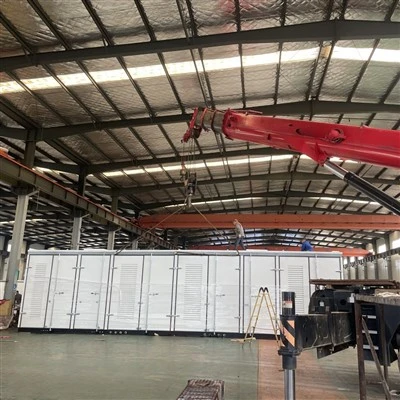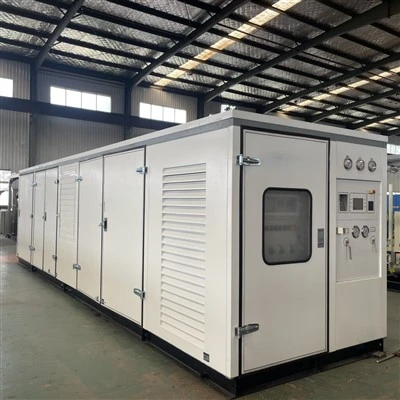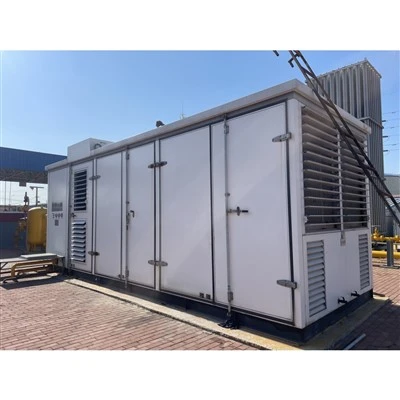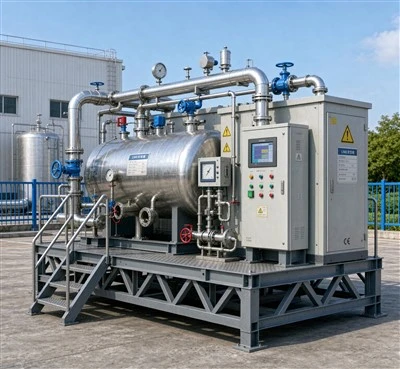
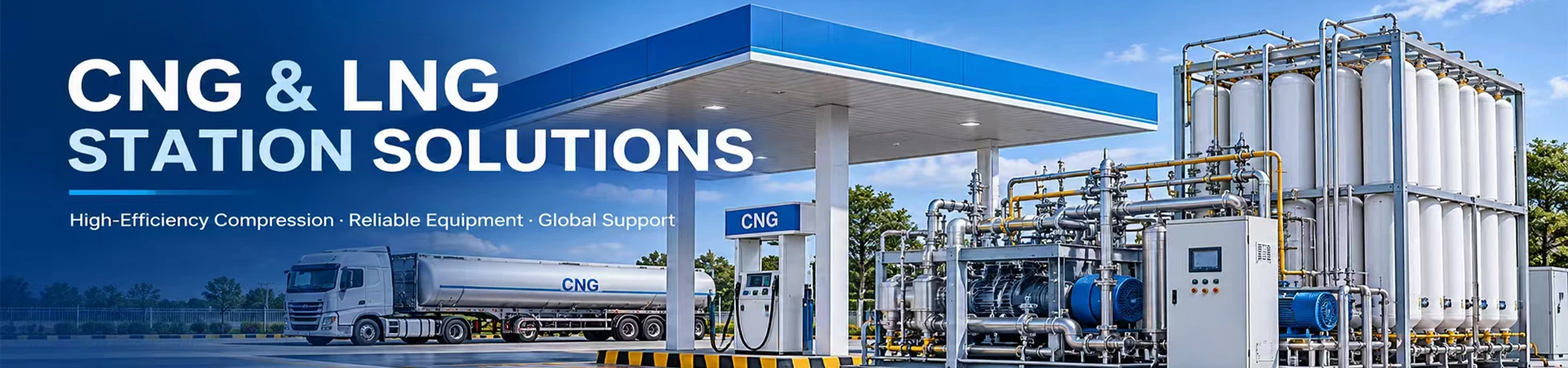
CNG satellite stations receive 25 MPa compressed natural gas (CNG) transported from a "mother station" via tube trailers. As they do not require a natural gas pipeline network, they are ideal for remote areas-such as mining sites, industrial parks, townships, and logistics hubs-that lack pipeline access. The selection process centers on five key dimensions: distance from the mother station, daily gas consumption, equipment type, site safety, and investment/operational costs.
I. Assessing Gas Supply and Transport Distance
1. Service Radius: The economical transport distance for a CNG satellite station is generally ≤150 km. Beyond 200 km, transportation costs for tube trailers rise significantly, eroding cost competitiveness; in such cases, an LNG-based gasification solution should be considered as an alternative.
2. Transport Capacity: The number of tube trailers required is determined by daily gas consumption plus a buffer for peak demand. Typically, a 1–2 day reserve capacity is recommended to prevent supply interruptions. Factors such as road accessibility, traffic restrictions, and potential transport risks during winter (snow/ice) or rainy weather must also be taken into account.
3. Gas Quality: Ensure that the natural gas from the mother station has been properly dehydrated and odorized to prevent equipment issues such as ice blockages or corrosion caused by moisture.
II. Selecting the Satellite Station Process Type Based on Daily Gas Supply Scale
CNG satellite stations are categorized into three types: hydraulic-driven, mechanical reciprocating compressor-based, and non-compressor (direct-fill) stations.
1. Hydraulic-Driven Satellite Stations (Recommended/Mainstream)
- Application: Suitable for daily gas volumes of 500–3,000 Nm³. These systems can effectively extract gas even as the pressure in the tube trailer drops from 20 MPa down to 3 MPa, ensuring high gas utilization. They feature a compact footprint, modular containerized (skid-mounted) design, and low noise levels, making them well-suited for simple, outdoor installations.
- Advantages: Lower energy consumption compared to mechanical compressors; modular, skid-mounted integration; rapid installation; and high portability (relocatable).
2. Mechanical Reciprocating Compressor-Based Satellite Stations
- Application: Designed for high-flow, long-term, stable, and high-load scenarios with larger daily gas volumes.
- Disadvantages: Higher noise levels, more stringent foundation requirements, a greater number of components requiring maintenance, and higher initial investment costs. 3. Compressor-free Direct-fill Satellite Station (Simplified Trailer-based Station)
- Application: Suitable for small-scale, short-term, or temporary gas demand; relies solely on the pressure within the transport trailer for direct dispensing.
- Limitations: Dispensing speed drops sharply once the trailer pressure falls to 10 MPa; gas utilization efficiency is low. Suitable only for projects with low daily consumption or intermittent gas usage.
For pipeline gas supply to residential, commercial, or industrial users (rather than vehicle refueling), a CNG cylinder-bank pressure-regulation station should be used. This configuration requires no compressor and is limited to gas unloading, pressure regulation, metering, and odorization; it features a smaller scale and a simpler approval process.
III. Gas Storage Configuration (in compliance with GB 50156)
- With fixed cylinder banks: Total geometric volume of fixed storage cylinders must be ≤ 18 m³; a maximum of one long-tube trailer is permitted on-site.
- Without fixed storage: A maximum of two long-tube trailers are permitted on-site, with the cylinders on the trailers themselves serving as the gas storage.
- Storage capacity: Designed to be 1.0–1.5 times the average daily gas consumption to account for potential transport delays or peak demand periods.
IV. Site Selection and Civil Engineering Requirements
1. Land Use: Must meet regulatory fire-separation distance requirements and be located away from densely populated areas such as schools, hospitals, and residential zones. The site must provide sufficient space for long-tube trailers to maneuver (turn around) and park for unloading.
2. Power Supply: Hydraulic skids or compressors require a stable power supply. In remote areas lacking a public power grid, diesel-powered generator sets may be considered.
3. Climate: In extremely cold regions, a heating system for the unloading process should be installed to prevent "ice plugging" caused by the Joule-Thomson effect during pressure regulation. In high-temperature regions, equipment must be provided with adequate shading and ventilation.
4. Environmental Protection and Fire Safety: Provisions must be made for fire-fighting water supply, combustible gas detection/alarms, emergency shut-off systems, and lightning/static electricity protection. V. Economic Comparison and Selection of Solutions
1. Daily consumption < 500 Nm³ (temporary projects): Prioritize containerized hydraulic-driven skid-mounted stations or cylinder-bank pressure-regulating stations. These offer low investment costs and short construction periods, and can be relocated and reused upon project completion.
2. Daily consumption > 2,000 Nm³ (long-term operations): Compare hydraulic-driven compressors with mechanical compressors, with a focus on electricity costs and the expenses associated with spare parts, operation, and maintenance.
3. Transport distance > 200 km or very high daily consumption: Evaluate alongside an LNG regasification station; select the optimal solution based on the combined cost of gas and transportation.
VI. Compliance Requirements
Operations must adhere to the *Technical Standard for Automobile Refueling, Gas-Filling, and Hydrogen-Refueling Stations (GB 50156)* and the *Code for Design of Compressed Natural Gas Supply Stations (GB 51102)*. Skid-mounted equipment must meet the qualifications required for special equipment; pressure vessels, pressure piping, and safety valves must undergo periodic inspection and calibration.
Simplified Selection and Decision-Making Process
1. Determine total daily gas consumption and peak hourly flow rate.
2. Identify the distance to the nearest CNG "mother station" (source station) and assess logistics conditions for trailer-based transport.
3. Make a preliminary selection of the process: hydraulic-driven skid, mechanical compressor, or direct-fill cylinder bank.
4. Determine gas storage capacity and trailer configuration.
5. Verify fire-safety separation distances at the site, as well as the availability of water and electricity utilities.
6. Calculate investment, gas costs, and logistics expenses; compare with an alternative LNG-based solution.