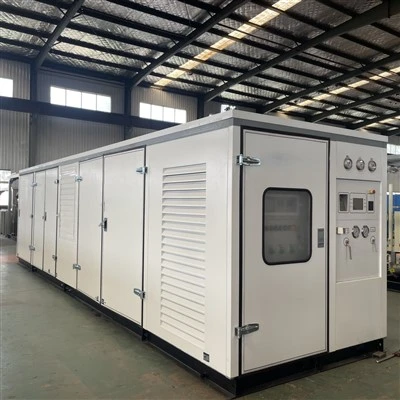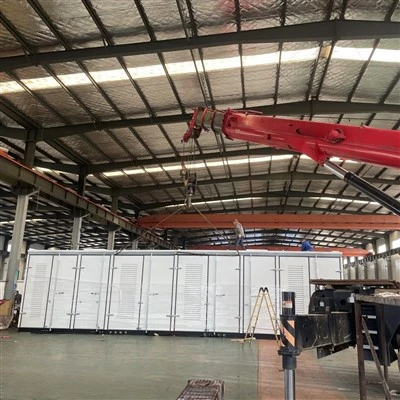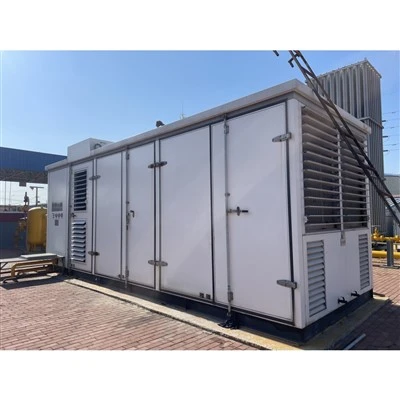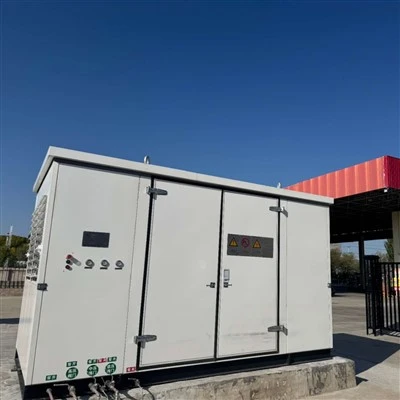

CNG Mother Station
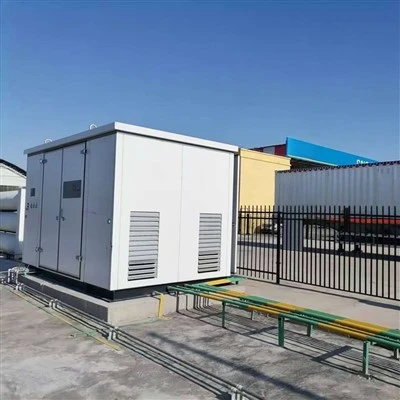
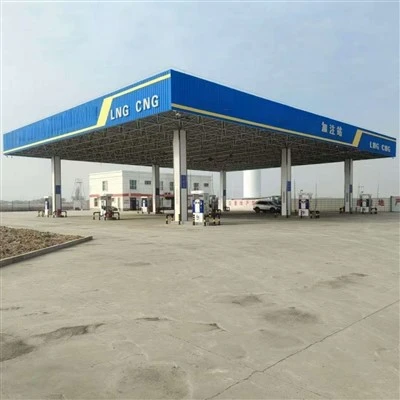
The gas source for the CNG Mother Station is drawn from a high-pressure natural gas pipeline network. After undergoing filtration and metering, the gas enters a dryer for dehydration. The dried gas then passes through a buffer tank before entering a compressor to be pressurized. The resulting high-pressure gas is split into two streams: one stream passes through a sequential control panel into a high-pressure gas storage bank, from where it is dispensed via a fueling dispenser to refuel CNG-powered vehicles; the other stream flows into a fueling column to refuel CNG tanker trucks.
Hydraulic CNG Daughter Station
Upon the arrival of a CNG daughter station trailer at the facility, high-pressure fluid inlet hoses, high-pressure fluid return hoses, control air bundles, and high-pressure CNG outlet hoses are connected to the hydraulic daughter station skid unit using quick-connect couplings. Once the system connections are complete-or whenever the PLC control system detects low hydraulic pressure-the high-pressure hydraulic pump activates. The automatic PLC control system then opens the inlet and outlet valves of a specific gas cylinder, injecting high-pressure hydraulic fluid into it. This action ensures that the gas pressure within the CNG daughter station trailer's cylinders is maintained within the range of 20–22 MPa. The CNG flows out of the cylinder's outlet port, passes through the high-pressure CNG outlet hose into the daughter station skid's buffer tank, and is subsequently conveyed via high-pressure piping to a CNG fueling dispenser to refuel CNG-powered vehicles.
Compressor-Based CNG Daughter Station
Upon the arrival of a CNG daughter station trailer at the facility, it is connected to a gas unloading column via high-pressure unloading hoses. The unloading compressor is then activated; after being pressurized by the compressor, the CNG passes through a sequential control panel into a storage bank comprising high-, medium-, and low-pressure gas storage vessels. The CNG stored within this storage bank can then be dispensed via a fueling dispenser to refuel CNG-powered vehicles.
Standard Station
Natural gas for the fueling station is drawn from a medium-pressure natural gas pipeline network. After undergoing filtration and metering, it enters a dryer for moisture removal. Subsequently, it passes through a buffer tank before entering a compressor for pressurization. Guided by a priority/sequence control panel, the gas is either directed to replenish a bank of storage vessels or transmitted directly to a dispenser to refuel CNG-powered vehicles; alternatively, natural gas stored within the vessel bank can be utilized via the dispenser to refuel these vehicles.