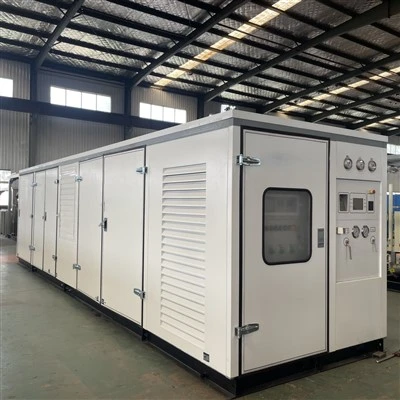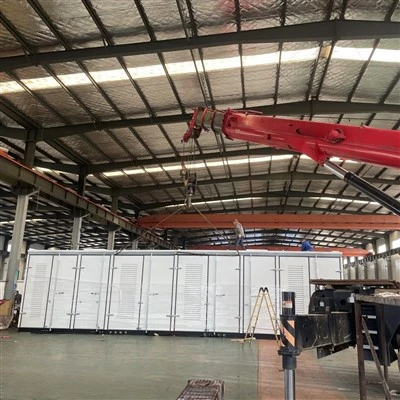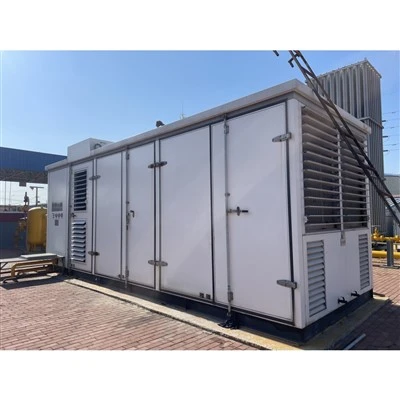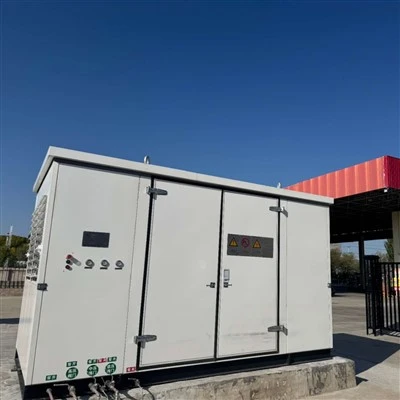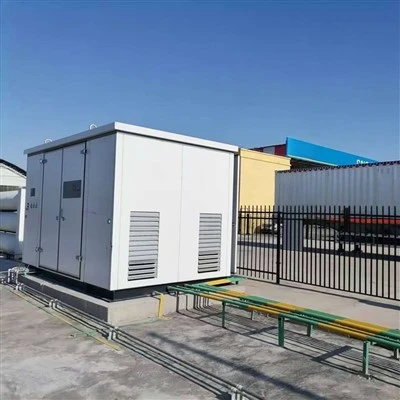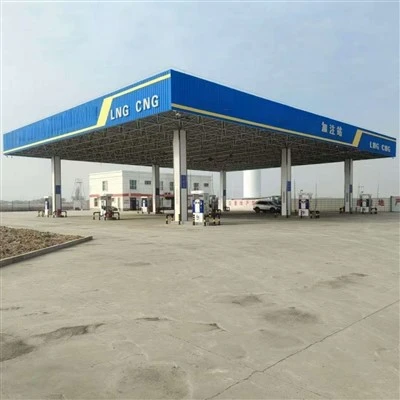

The operational workflow of an LNG refueling station is relatively complex, primarily comprising the stages of unloading, storage, pressurization, vaporization, and refueling.
Unloading Stage: LNG is transported to the refueling station via specialized tank trucks. These tank trucks are equipped with cryogenic piping and handling equipment, connecting to the station's internal storage system via an unloading platform. During the unloading process, the pressure differential between the tank truck and the storage tank is utilized to transfer the LNG from the truck into the station's cryogenic storage tanks. Typically, tank trucks feature an onboard pressurization unit; if the pressure differential proves insufficient, this unit can be activated to ensure the smooth transfer of LNG into the storage tanks.
Storage Stage: The storage tanks constitute one of the most critical components of the refueling station. They possess excellent thermal insulation properties, effectively minimizing heat ingress to maintain the LNG in its cryogenic state. Generally, a double-walled metal tank structure is employed, with the interstitial space filled with insulating materials-such as perlite-to minimize heat conduction. The storage tanks are fitted with multiple ports to facilitate gas and liquid inflow/outflow, as well as connections for various instrumentation used to monitor parameters such as internal temperature, pressure, and liquid level in real-time.
Pressurization Stage: To meet the pressure requirements for vehicle refueling, the LNG within the storage tanks must undergo pressurization. Two common methods are utilized for this purpose: The first involves using a cryogenic pump to boost the LNG pressure to the required level. The second method employs a vaporizer to gasify a portion of the LNG; the resulting gas is then returned to the storage tank, thereby increasing the internal pressure. Each of these methods presents distinct advantages and disadvantages; in practical applications, the choice of method is determined by the specific operational conditions and requirements of the refueling station.
Vaporization Stage: During the refueling process, a portion of the LNG must be vaporized. This vaporized gas is then mixed with the liquid LNG to ensure that the composition of the dispensed natural gas meets the combustion requirements of the vehicle's engine. Typically, ambient air vaporizers are utilized for this purpose, harnessing the thermal energy of the surrounding air to facilitate the vaporization of the LNG. These vaporizers consist of an array of finned tubes; as the LNG flows through these tubes, it exchanges heat with the external air, thereby achieving vaporization.
Refueling Stage: Once the LNG has undergone the necessary pressurization and vaporization treatments, it is dispensed into vehicles via a refueling dispenser. The dispenser is equipped with metering devices and a refueling nozzle, enabling precise control over the dispensed volume while ensuring the safety of the entire refueling operation. The vehicle's LNG cylinder is connected to the refueling dispenser via a specialized refueling hose. During the refueling process, the operator inserts the refueling nozzle into the cylinder's inlet and activates the dispenser, allowing LNG to flow into the vehicle's cylinder.