
1. What Is a CNG Daughter Station?
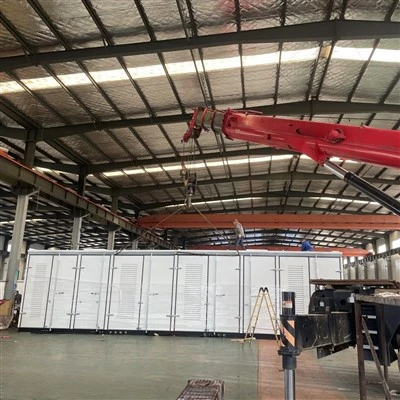
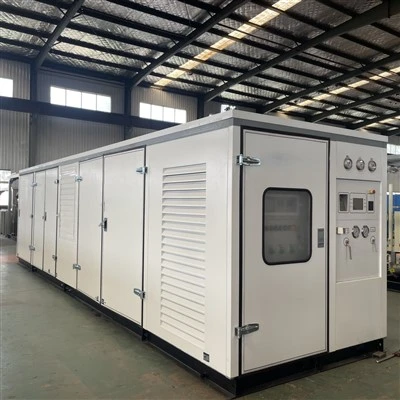
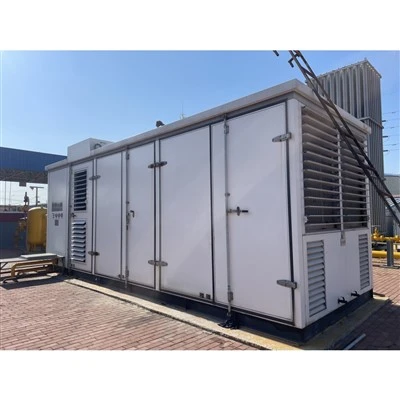
A CNG daughter station (also known as a CNG sub-station) is a popular modular refueling facility that does not require a natural gas pipeline connection. Unlike traditional CNG mother stations that draw gas directly from city pipeline networks, daughter stations obtain pre-compressed CNG via high-pressure tube trailers transported from centralized CNG mother stations .
It is the most flexible and cost-effective solution for remote areas, suburban zones, industrial parks, mining sites, and temporary fleet fueling points where pipeline infrastructure is unavailable or too costly to construct .
2. How Does a CNG Daughter Station Work?
The operation logic of a CNG daughter station relies on pressure difference fueling and booster supplementation. The entire workflow is simple, stable, and easy for daily operation:
Gas Supply: High-pressure CNG (20–25 MPa) is filled and transported by tube trailers from qualified CNG mother stations .
Direct Pressure Fueling: When the trailer pressure is higher than the vehicle cylinder pressure, gas flows automatically to vehicles through dispensers without extra compression .
Booster Complementation: When trailer pressure drops (below 20 MPa), a dedicated booster compressor boosts residual pressure to ensure stable and fast refueling, avoiding slow filling or insufficient gas volume .
Storage & Dispensing: On-site cascade storage balances peak fueling demand, ensuring continuous service during rush hours.
Compared with mother stations, daughter stations eliminate large primary compression units, greatly reducing equipment investment and site construction difficulty .
3. Core Equipment of a CNG Daughter Station
A standard daughter station features a compact equipment combination, supporting fast installation and modular deployment:
CNG Booster Compressor: The core unit to squeeze residual gas from tube trailers and stabilize outlet pressure .
High-Pressure Storage Cascade: Buffers pressure fluctuation and supports peak-hour refueling.
CNG Dispensers: Precision metering fueling machines for buses, trucks, and commercial fleets.
Priority Control Panel: Automatically switches pressure levels to improve gas utilization efficiency .
Safety & Control System: Includes pressure relief, leakage detection, emergency shutdown, and real-time monitoring modules.
4. CNG Daughter Station vs Mother Station: Key Differences
This comparison helps investors select the correct station type according to site conditions:
|
Item |
CNG Mother Station |
CNG Daughter Station |
|---|---|---|
|
Gas Source |
Direct city pipeline connection |
Tube trailer transportation from mother station |
|
Pipeline Requirement |
Mandatory |
Not required |
|
Construction Cost |
High |
Only ~30% of mother station cost |
|
Installation Cycle |
3–6 months |
1–7 days for modular containerized type |
|
Operation Cost |
High (large power consumption) |
Low (no primary compression) |
|
Flexibility |
Fixed location, hard to relocate |
Mobile and relocatable |
|
Best Application |
Urban core areas, high-volume long-term stations |
Remote zones, temporary projects, fleet depots, suburbs |
5. CNG Daughter Station Construction Cost (2026 Standard)
The total investment of a standard commercial CNG daughter station ranges from $600,000 to $1,200,000 . Containerized skid-mounted types can further reduce costs for small-scale fleet stations.
Main cost components:
Booster compressor & control system
High-pressure storage cascade
CNG dispensers and metering system
Site layout, safety isolation and civil works
Permitting, certification and commissioning
Due to no need for large pipeline transformation and primary compression equipment, daughter stations have lower upfront investment and faster capital recovery, making them ideal for small and medium energy investors .
6. Advantages of CNG Daughter Stations
No Pipeline Dependency: Operates completely independently of urban gas pipelines, solving fueling difficulties in remote regions .
Ultra-Fast Deployment: Modular skid design supports on-site installation within 1 week, greatly shortening project cycle .
Low Investment & Low Risk: Drastically reduces civil construction and equipment costs with flexible scaling .
High Flexibility: Can be relocated according to project demands, suitable for temporary engineering, mining fleets, and seasonal fueling demands .
Simple Operation & Maintenance: Fewer core units, lower power consumption, and lower daily maintenance costs.
7. Limitations & Solutions
Daughter stations have minor operational limitations, which can be solved via standardized configuration:
Limitation: Dependent on tube trailer supply; continuous transportation scheduling is required.
Solution: Cooperate with stable mother station suppliers and adopt multi-trailer rotation supply.
Limitation: Refueling speed slows down when trailer pressure is too low .
Solution: Equip high-efficiency booster compressors to fully utilize residual pressure.
8. Best Application Scenarios in 2026
CNG daughter stations are becoming the mainstream incremental solution for global clean energy fueling infrastructure, perfectly fitting these scenarios:
Suburban areas, rural regions, and towns without pipeline coverage
Logistics parks, bus depots, and fixed fleet fueling bases
Mining areas, remote industrial zones, and temporary construction projects
Emergency backup fueling stations and short-term energy support projects
9. ROI Analysis: Is a CNG Daughter Station Profitable?
For investors, daughter stations feature low entry threshold and fast payback. Although the gas purchasing cost is slightly higher than pipeline-connected mother stations, the saved pipeline construction, high-power equipment, and long-period civil engineering costs significantly reduce overall financial pressure .
With stable fleet order support, most standardized CNG daughter stations can achieve positive cash flow in Year 2 and full payback within 3–5 years, which is more competitive than traditional fixed CNG stations in undeveloped markets.
10. Final Verdict
CNG daughter stations fill the market gap for no-pipeline, fast-deployment, low-investment clean fueling infrastructure. For 2026 global energy projects, especially in emerging markets, remote industrial zones, and fleet-intensive areas, daughter stations are the most cost-effective and flexible CNG station type for rapid business expansion.
Custom CNG Daughter Station Solutions
If you are planning a CNG daughter station project, our team provides one-stop solutions including site layout design, equipment selection, cost budgeting, safety standard configuration, and turnkey construction services. Contact us to get a customized technical proposal and accurate project quotation.