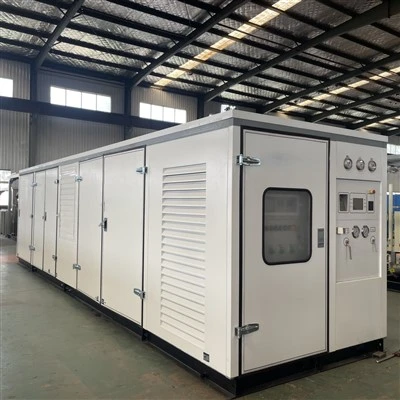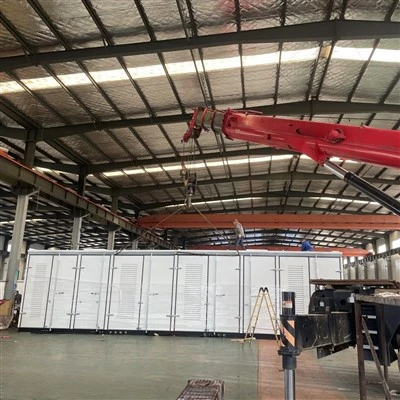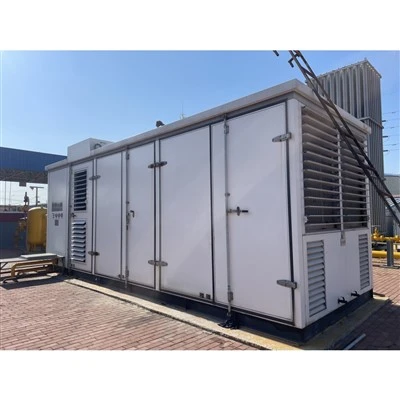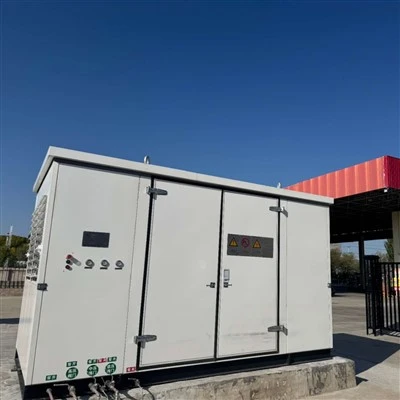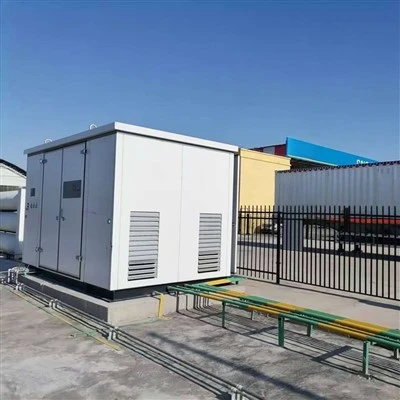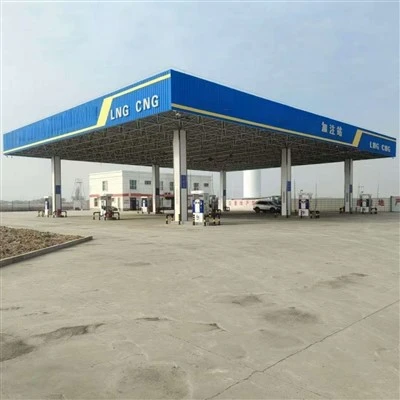

The installation of CNG sub-station compressors is a relatively complex and rigorous undertaking, critical to the proper operation and safety performance of the entire CNG sub-station. The following section provides a detailed overview of the installation steps for CNG sub-station compressors.
Pre-Installation Preparations
Site Planning and Inspection
The installation site must be sufficiently spacious, providing ample room for the placement of the compressor and its auxiliary equipment, while also facilitating subsequent operation, maintenance, and repair activities. The ground surface of the site should be level and possess adequate load-bearing capacity to withstand the weight and vibrations generated during compressor operation, thereby preventing ground settlement that could lead to equipment displacement or damage.
Inspect the site's ventilation conditions; proper ventilation is crucial for heat dissipation during compressor operation. Ensure that there is a sufficient influx of fresh air and that the heat-as well as any potentially leaking gases-generated by the compressor can be promptly exhausted to prevent accumulation and mitigate safety hazards.
Equipment and Material Inspection
Carefully verify that the models and specifications of the compressor and all auxiliary equipment align with the design requirements, ensuring the integrity and quality of the machinery. Inspect the equipment's exterior for any defects-such as damage or deformation-and confirm that all components and parts are present.
Inspect the various materials required for installation-including pipes, valves, flanges, bolts, gaskets, etc. The materials' composition and specifications must comply with relevant standards and design requirements to ensure they are free of quality defects. For instance, pipes should be free of cracks, pinholes, and similar flaws; valves should operate smoothly; and flange sealing surfaces should be flat and smooth.
Tool Preparation
Assemble a complete set of tools required for the installation process. This includes lifting equipment (such as cranes or forklifts) for hoisting and positioning the machinery; common hand tools (such as wrenches, screwdrivers, and pliers) for the disassembly and assembly of components; spirit levels for leveling the equipment; and theodolites for aligning the equipment. Ensure that all tools are in good working order and that their precision meets the required standards to guarantee the smooth execution of the installation work.
Foundation Construction and Equipment Positioning
Foundation Construction
Based on the dimensions, weight, and operational requirements of the compressor, design and construct an appropriate foundation. Foundations are typically constructed using poured concrete; prior to pouring, ensure that the placement of the steel reinforcement bars within the foundation complies with design specifications to guarantee the foundation's strength and stability.
Embed anchor bolts or leave pre-reserved holes for anchor bolts within the foundation to facilitate the subsequent securing of the compressor. The foundation surface must be level, and any deviation from true levelness should be controlled within the specified range-typically not exceeding ±5 mm/m.
Equipment Lifting and Positioning
Use appropriate hoisting equipment to lift the compressor over the foundation, then slowly and steadily lower it into its designated position on the foundation. During the lifting process, exercise care to protect the equipment and prevent any collisions or damage.
Once positioned, adjust the compressor's placement to align its centerline with the installation reference lines previously marked on the foundation. Any deviation should be kept to a minimum-generally not exceeding ±5 mm.
Compressor Installation and Anchoring
Leveling and Alignment
Use a precision level to level the compressor; adjust the compressor's anchor bolts until the specified levelness requirements are met. Typically, the longitudinal levelness deviation of the compressor must not exceed 0.05 mm/m, while the transverse levelness deviation must not exceed 0.10 mm/m.
Use instruments such as a theodolite to align the compressor, ensuring that its axis corresponds precisely with the design specifications. This guarantees the stability and reliability of the compressor during operation. The alignment process requires precise measurement and iterative adjustment until all standards are fully met.
Securing Anchor Bolts
Once the compressor has been leveled and aligned, proceed to secure the anchor bolts. First, fill the pre-reserved anchor bolt holes with concrete or grouting material. After the material has cured and attained sufficient strength, tighten the anchor bolt nuts to firmly anchor the compressor to the foundation. When tightening the nuts, ensure that the force applied is uniform to prevent uneven stress distribution that could lead to deformation of the compressor.
Piping Connections
Piping Installation
Install the compressor's inlet and outlet piping in strict accordance with the design specifications. The piping layout should be level horizontally and plumb vertically, arranged in an orderly manner to avoid twisting, crossing, or similar irregularities. Piping connections may be established via welding, flanged joints, or other methods; the appropriate connection method should be selected based on factors such as the pipe material and operating pressure.
When welding piping, ensure that the weld quality is of the highest standard and that the welding procedures comply with all relevant standards. Prior to welding, thoroughly clean the pipe joints to remove oil, rust, and other contaminants. During the welding process, carefully control the welding parameters to prevent the occurrence of welding defects. When making flanged connections, ensure that the flange sealing surfaces are flat, the gaskets are installed correctly, and the bolt tightening torque meets the specified requirements to guarantee effective sealing performance.
Pipe Support Installation
To ensure the stability and safety of the piping system, appropriate pipe supports must be installed. The spacing of these supports should be determined rationally based on factors such as the pipe material, diameter, weight, and the medium being conveyed. Support types include fixed supports, sliding supports, guide supports, and others; the appropriate type should be selected based on the specific conditions of the piping system.
Supports must be installed firmly and reliably, ensuring good contact with the pipe without hindering the pipe's normal thermal expansion or displacement. At locations such as pipe bends and branch points, support density should be increased to accommodate changes in pipe stress.
Electrical System Installation
Electrical Wiring
Lay out the electrical wiring in accordance with the compressor's electrical control requirements. The wiring must utilize cables or wires that comply with relevant standards, and their specifications must meet the compressor's power and operational demands. Wiring must be routed neatly and systematically, avoiding haphazard routing or improper connections.
Electrical wiring should be routed through conduits for protection against mechanical damage and adverse environmental conditions. Where wiring passes through structural elements-such as floor slabs or walls-protective sleeves or conduits must be installed. Additionally, proper grounding or neutral bonding protection must be implemented to ensure electrical safety.
Electrical Equipment Installation
Install electrical equipment such as the compressor's control cabinet and power distribution cabinet. This equipment should be situated in a location that is dry, well-ventilated, and easily accessible for operation and maintenance. The equipment must be mounted securely, and all wiring connections must be correct and firm; furthermore, the operation of all individual electrical components should be responsive and reliable.
Commission the electrical equipment to verify that all performance parameters meet the specified requirements. For instance, check that the motor's direction of rotation is correct, that the control circuits function accurately, and that safety protection devices are sufficiently sensitive. During the commissioning process, strictly adhere to the prescribed commissioning procedures for the electrical equipment to ensure the proper functioning of the entire electrical system.
Instrumentation Installation
Pressure Instrumentation Installation
Install pressure instruments-such as pressure gauges and pressure sensors-on the compressor's inlet and outlet piping, as well as at other critical points within the system. The installation locations for these pressure instruments should facilitate easy observation and operation, while simultaneously ensuring the accuracy of their measurements.
During installation, pay close attention to the instrument's mounting orientation and connection thread dimensions to ensure a tight, leak-free connection with the piping. A shut-off valve must be installed upstream of any pressure instrumentation to allow for the isolation of the pressure source during instrument maintenance or replacement, thereby ensuring operational safety.
Installation of Temperature Instrumentation
Install temperature instrumentation-such as thermometers, temperature sensors, and similar devices-to monitor temperatures at critical points within the compressor system, such as cylinder temperatures and lubricant oil temperatures. The mounting location for temperature instruments must be capable of accurately reflecting the temperature of the specific component being monitored; typically, they are installed at a suitable position in close proximity to the measurement point.
Particular attention must also be paid to the mounting method and interface dimensions of the temperature instruments to ensure a secure installation and effective sealing. Following installation, the instruments must be calibrated to guarantee the accuracy of temperature measurements.
System Commissioning and Acceptance
System Commissioning
Upon the completion of all installation tasks, proceed with the commissioning of the CNG sub-station compressor system. The process begins with "no-load" commissioning: start the compressor and inspect its operational status, verifying that parameters such as motor performance, compressor vibration levels, and acoustic output are within normal limits. Observe the lubrication status of all moving parts to ensure a consistent and adequate supply of lubricant oil.
Next, conduct "load" commissioning by gradually increasing the compressor's operational load to evaluate its performance under various operating conditions. Monitor key parameters-such as pressure, temperature, and flow rate-to ensure they remain within their specified normal ranges, and verify that all control systems and safety protection devices are functioning correctly. Promptly address and resolve any issues or anomalies identified during the commissioning process.
System Acceptance
Once commissioning has been successfully completed, organize a formal acceptance inspection of the CNG sub-station compressor installation involving all relevant personnel. The scope of the acceptance inspection covers various aspects, including the quality of equipment installation, operational performance, and safety protection measures. Verify that all equipment specifications and performance metrics comply with the original design requirements and applicable industry standards.
Following successful acceptance, compile all documentation generated during the installation process-such as equipment installation records, commissioning reports, and inspection reports-and archive them as part of the project's engineering records for future reference during maintenance and facility management.
The installation of a CNG sub-station compressor is a complex, systems-oriented undertaking that requires strict adherence to the aforementioned steps and requirements. By following these protocols, the quality of the installation is ensured, thereby providing a solid foundation for the compressor's reliable operation and guaranteeing a safe, stable supply of CNG at the sub-station.