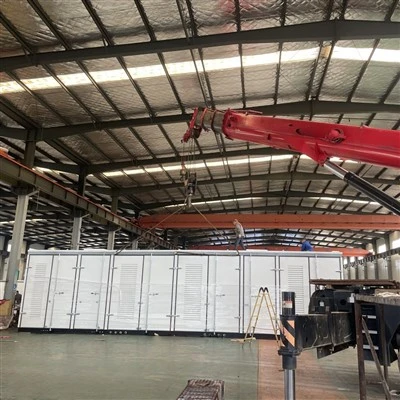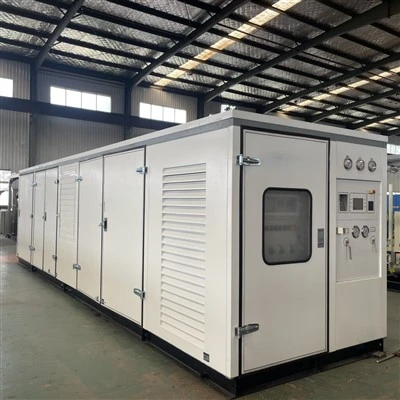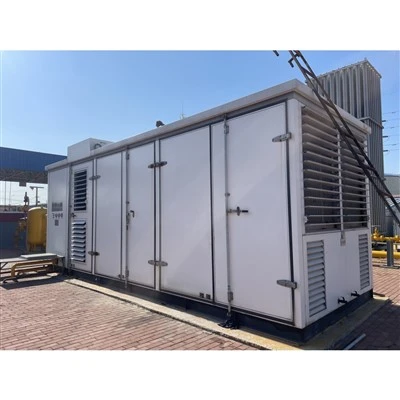

A CNG (Compressed Natural Gas) pressure reduction station is a facility designed to convert high-pressure natural gas into low-pressure natural gas suitable for residential and commercial use. It plays a vital role in the energy sector, providing a safe and reliable energy option. This article provides a detailed overview of the operating principles and advantages of CNG pressure reduction stations.
The operation of a CNG pressure reduction station involves several key steps: First, high-pressure natural gas enters the station from the pipeline system. Next, the gas passes through a pressure-reducing valve, which lowers its pressure to a level appropriate for residential and commercial requirements. During this process, the station also filters out impurities and liquid components, ensuring the purity and stability of the natural gas. Finally, the pressure-reduced gas is delivered to end-users for various applications, such as heating, cooking, or power generation.
CNG pressure reduction stations offer the following advantages:
1. Environmental Friendliness and Energy Efficiency: As a clean energy source, CNG produces lower carbon emissions and offers higher combustion efficiency compared to traditional fuels. Utilizing CNG pressure reduction stations helps reduce the emission of air pollutants, making it a more environmentally friendly choice.
2. Safety and Reliability: CNG pressure reduction stations are equipped with advanced safety control systems, ensuring the secure transport and supply of natural gas. Furthermore, CNG is inherently safer-it is not prone to spontaneous combustion or explosion-thereby minimizing the risk of fire or blast incidents.
3. Economic Benefits: The construction and operational costs of CNG pressure reduction stations are relatively low, making them a more economical energy solution. These stations can also be flexibly adjusted to meet specific user energy demands, offering customized solutions that further enhance economic efficiency.
4. Stable Supply: By delivering natural gas to end-users via a pipeline system, CNG pressure reduction stations ensure a consistent supply. Unlike Liquefied Petroleum Gas (LPG), CNG is not constrained by the complexities of liquefaction and storage, making its supply more convenient and reliable.
In summary, by converting high-pressure natural gas into a low-pressure form, CNG pressure reduction stations provide significant advantages in terms of environmental protection, safety, cost-effectiveness, and supply stability. It offers users a reliable, energy-efficient, and environmentally friendly energy option, and will play an increasingly important role in the future development of energy.